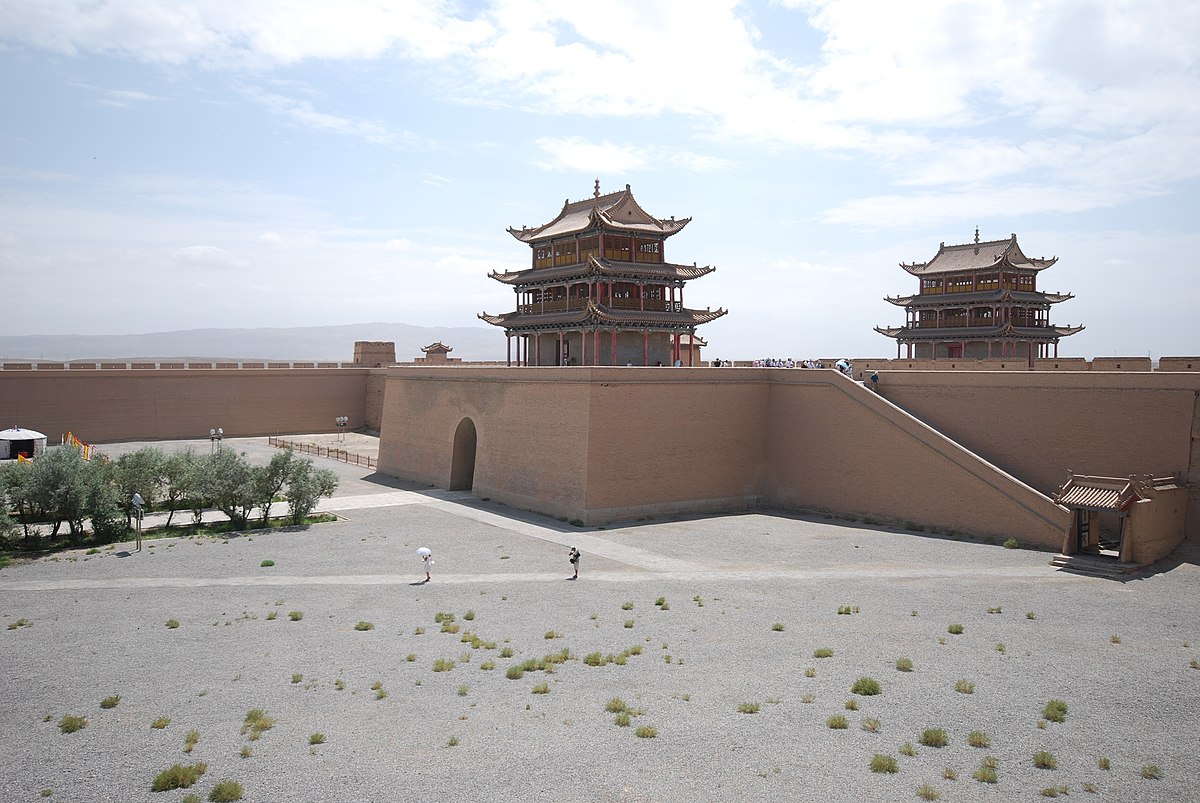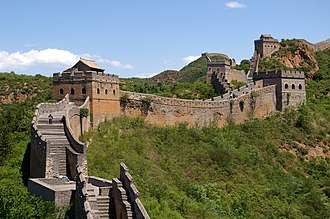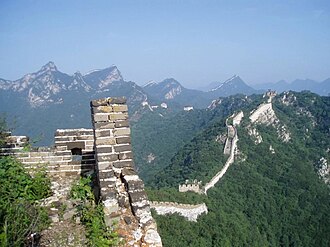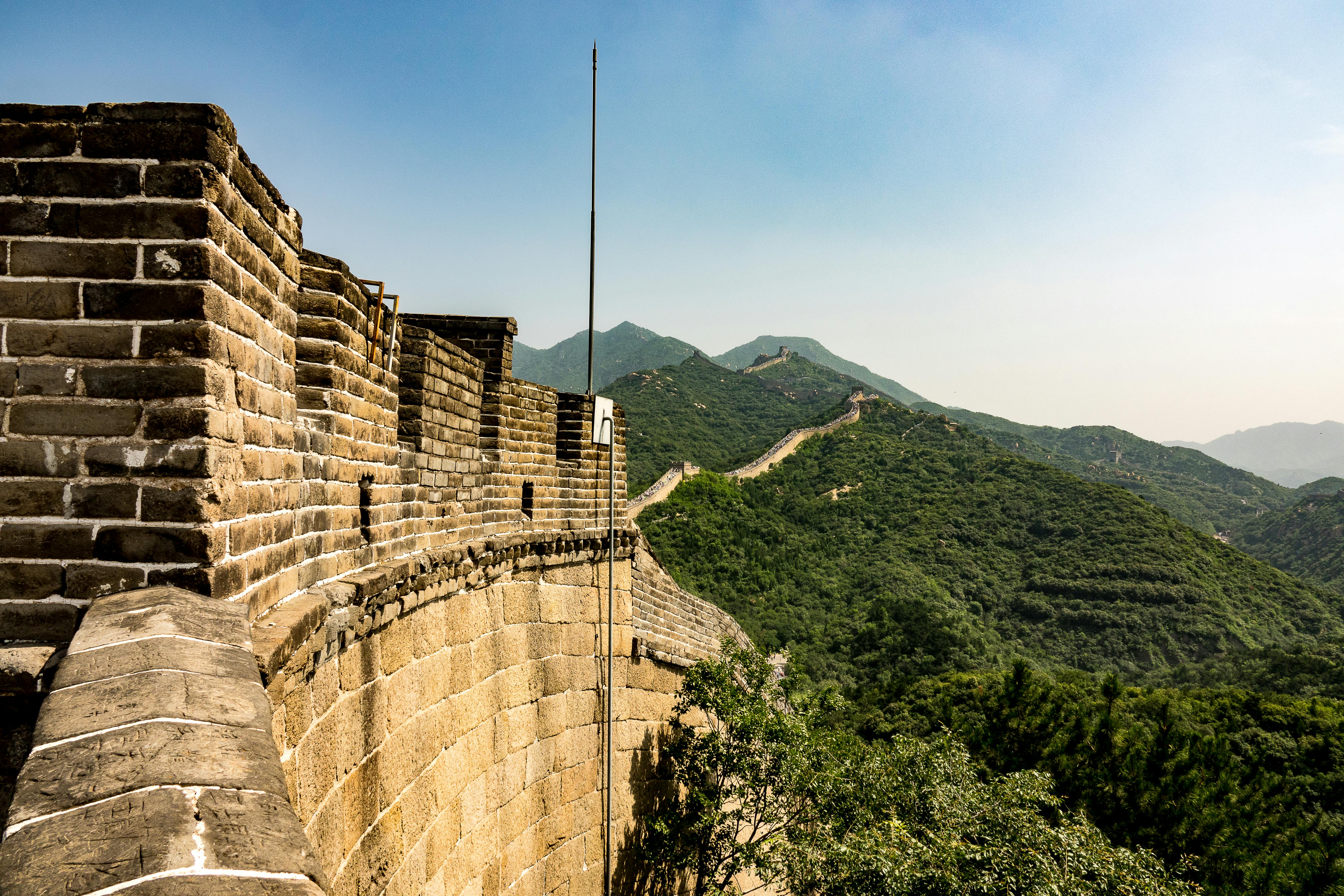
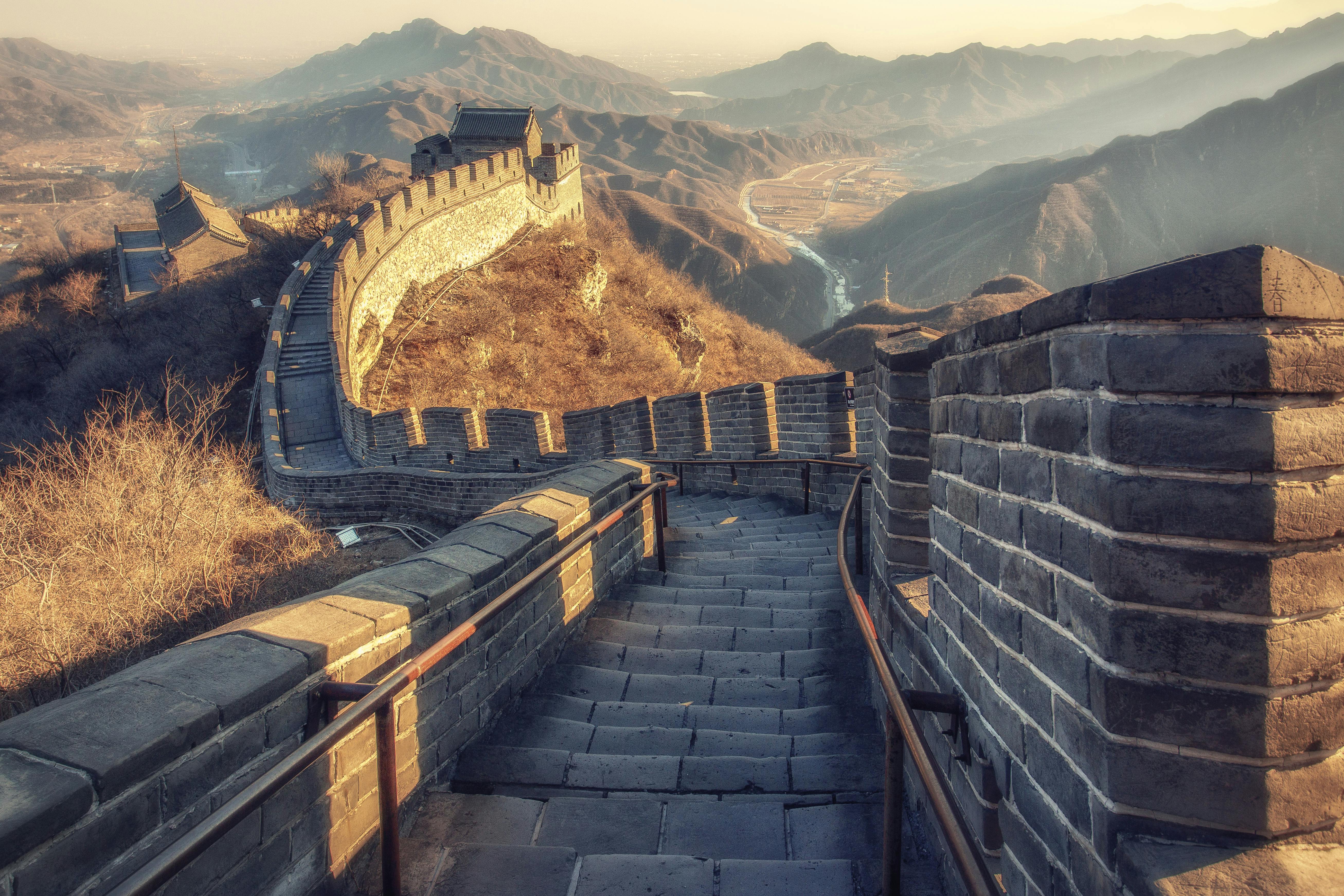
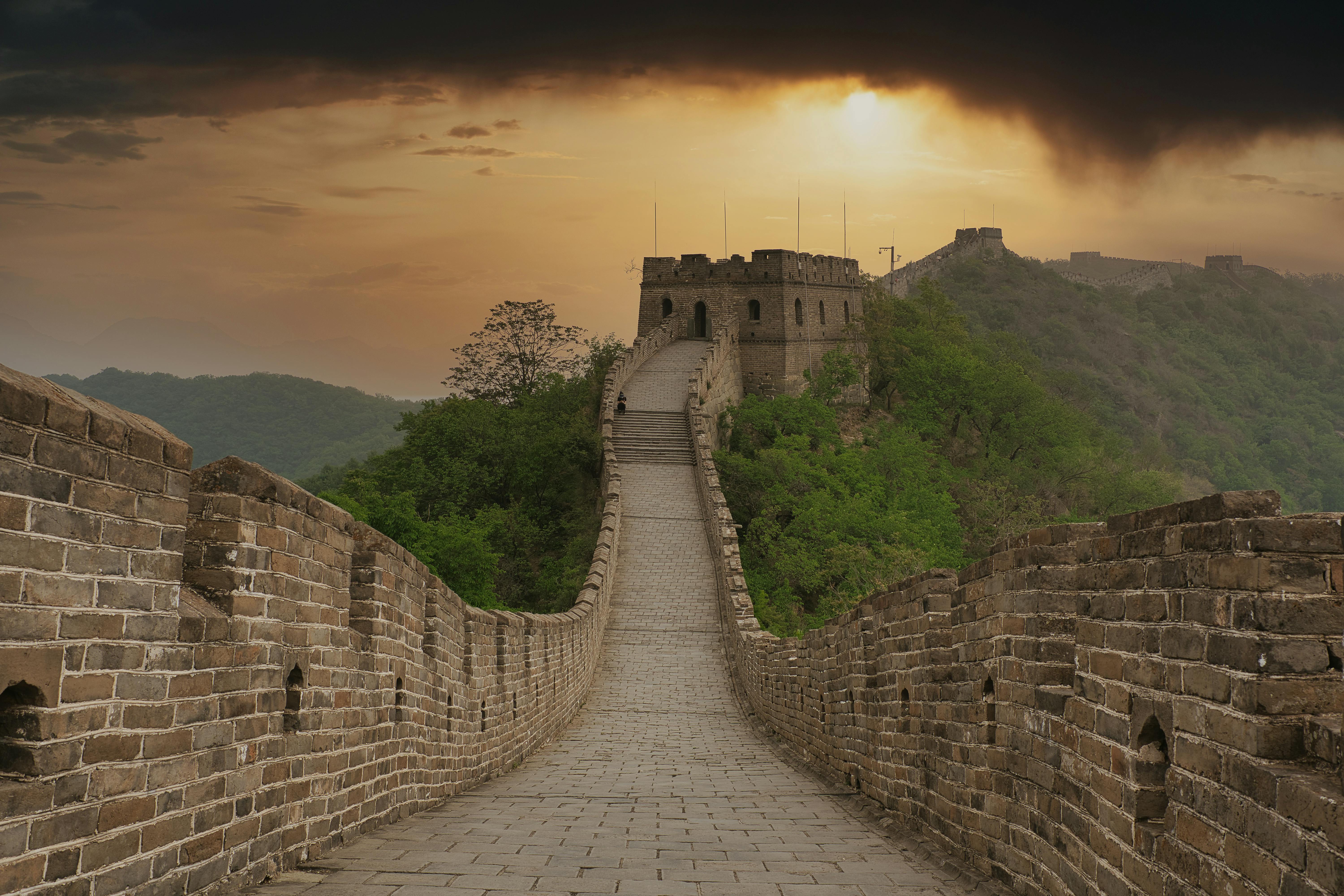
About The Greate Wall of China
The Great Wall of China is a series of fortifications that were built across the historical northern borders of ancient Chinese states and Imperial China as protection against various nomadic groups from the Eurasian Steppe. Several walls were built from as early as the 7th century BC, with selective stretches later joined by Qin Shi Huang (220–206 BC), the first emperor of China. Little of the Qin wall remains. Later on, many successive dynasties built and maintained multiple stretches of border walls. The best-known sections of the wall were built by the Ming dynasty (1368–1644).
Apart from defense, other purposes of the Great Wall have included border controls, allowing the imposition of duties on goods transported along the Silk Road, regulation or encouragement of trade and the control of immigration and emigration.[6] Furthermore, the defensive characteristics of the Great Wall were enhanced by the construction of watchtowers, troop barracks, garrison stations, signaling capabilities through the means of smoke or fire, and the fact that the path of the Great Wall also served as a transportation corridor.
The frontier walls built by different dynasties have multiple courses. Collectively, they stretch from Liaodong in the east to Lop Lake in the west, from the present-day Sino–Russian border in the north to Tao River (Taohe) in the south; along an arc that roughly delineates the edge of the Mongolian steppe; spanning 21,196.18 km (13,170.70 mi) in total.[7][3] Today, the defensive system of the Great Wall is generally recognized as one of the most impressive architectural feats in history.[8]
Names
In Chinese histories, the term "Long Wall(s)" (t 長城, s 长城, Chángchéng) appears in Sima Qian's Records of the Grand Historian, where it referred both to the separate great walls built between and north of the Warring States and to the more unified construction of the First Emperor.[9] The Chinese character 城, meaning city or fortress, is a phono-semantic compound of the "earth" radical 土 and phonetic 成, whose Old Chinese pronunciation has been reconstructed as *deŋ.[10] It originally referred to the rampart which surrounded traditional Chinese cities and was used by extension for these walls around their respective states; today, however, it is much more often the Chinese word for "city".
Early walls
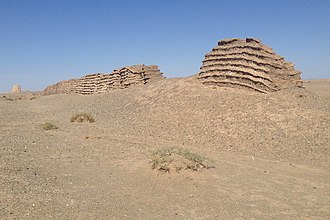
The Chinese were already familiar with the techniques of wall-building by the time of the Spring and Autumn period between the 8th and 5th centuries BC.[22] During this time and the subsequent Warring States period, the states of Qin, Wei, Zhao, Qi, Han, Yan, and Zhongshan[23][24] all constructed extensive fortifications to defend their own borders. Built to withstand the attack of small arms such as swords and spears, these walls were made mostly of stone or by stamping earth and gravel between board frames.
Ming era
The Great Wall concept was revived again under the Ming in the 14th century,[30] and following the Ming army's defeat by the Oirats in the Battle of Tumu. The Ming had failed to gain a clear upper hand over the Mongol tribes after successive battles, and the long-drawn conflict was taking a toll on the empire. The Ming adopted a new strategy to keep the nomadic tribes out by constructing walls along the northern border of China. Acknowledging the Mongol control established in the Ordos Desert, the wall followed the desert's southern edge instead of incorporating the bend of the Yellow River.