About The Roman Colosseum
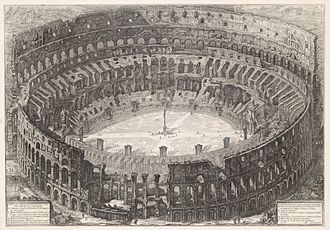
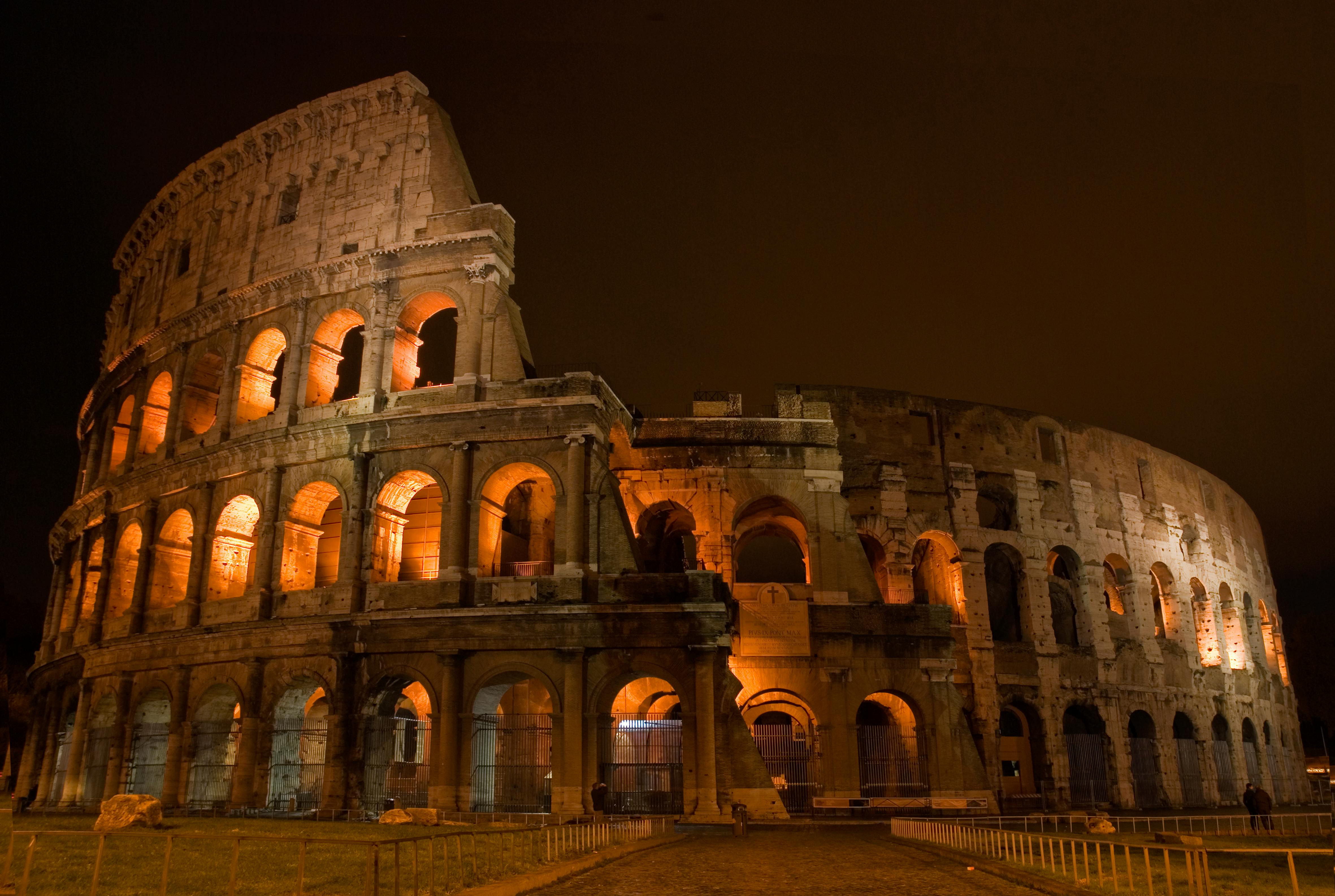
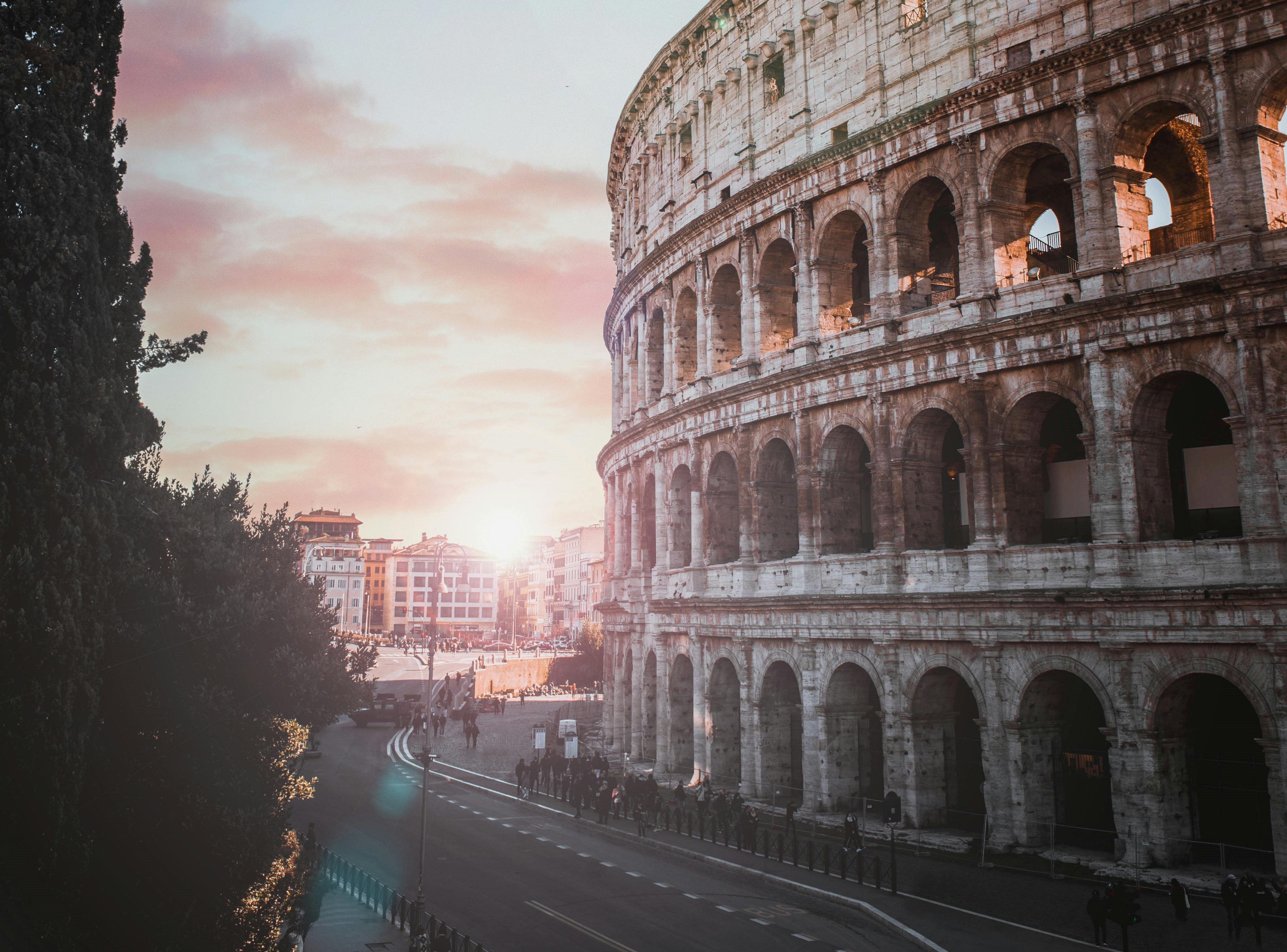
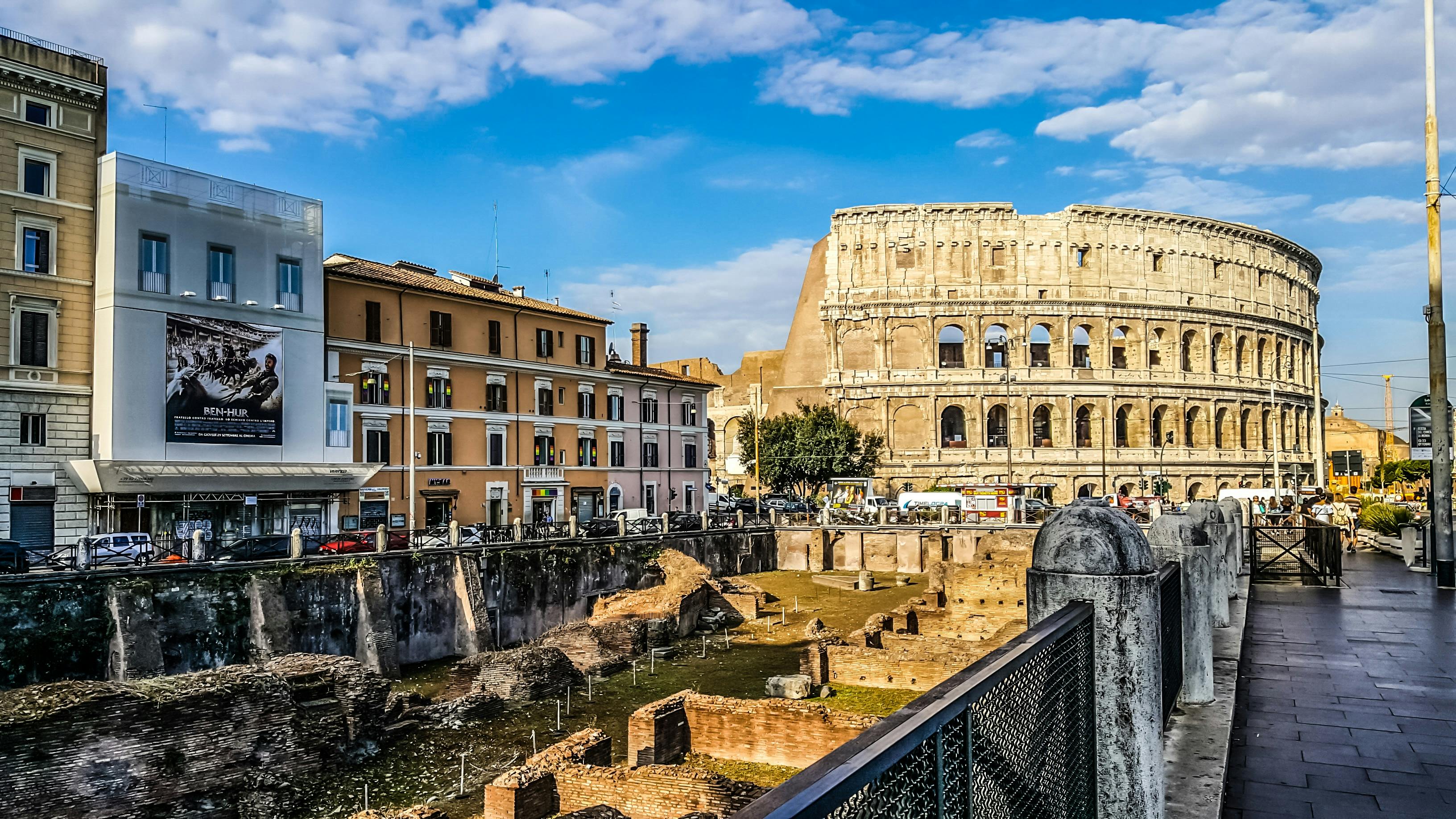
The Colosseum (/ˌkɒləˈsiːəm/ KOL-ə-SEE-əm; Italian: Colosseo [kolosˈsɛːo]) is an elliptical amphitheatre in the centre of the city of Rome, Italy, just east of the Roman Forum. It is the largest ancient amphitheatre ever built, and is still the largest standing amphitheatre in the world, despite its age. Construction began under the emperor Vespasian (r. 69–79 AD) in 72[1] and was completed in AD 80 under his successor and heir, Titus (r. 79–81).[2] Further modifications were made during the reign of Domitian (r. 81–96).[3] The three emperors who were patrons of the work are known as the Flavian dynasty, and the amphitheatre was named the Flavian Amphitheatre (Latin: Amphitheatrum Flavium; Italian: Anfiteatro Flavio [aɱfiteˈaːtro ˈflaːvjo]) by later classicists and archaeologists for its association with their family name (Flavius).
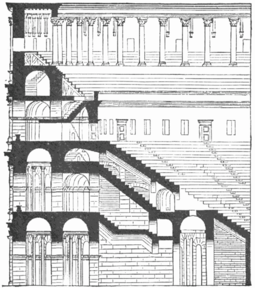
The Colosseum is built of travertine limestone, tuff (volcanic rock), and brick-faced concrete. It could hold an estimated 50,000 to 80,000 spectators at various points in its history,[4][5] having an average audience of some 65,000;[6] it was used for gladiatorial contests and public spectacles including animal hunts, executions, re-enactments of famous battles, and dramas based on Roman mythology, and briefly mock sea battles. The building ceased to be used for entertainment in the early medieval era. It was later reused for such purposes as housing, workshops, quarters for a religious order, a fortress, a quarry, and a Christian shrine.
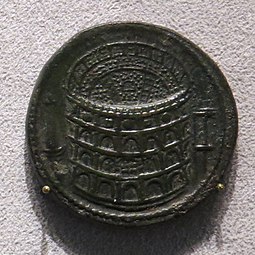
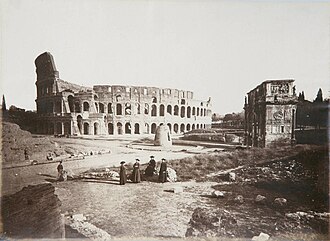
Although substantially ruined by earthquakes and stone robbers taking spolia, the Colosseum is still a renowned symbol of Imperial Rome and was listed as one of the New 7 Wonders of the World.[7] It is one of Rome's most popular tourist attractions and has links to the Catholic Church, as each Good Friday the Pope leads a torchlit "Way of the Cross" procession that starts in the area around the Colosseum.[8] The Colosseum is depicted on the Italian version of the 5 euro cent coin.
Name
Originally, the building's Latin name was simply amphitheatrum, 'amphitheatre'.[9] Though the modern name Flavian Amphitheatre (Latin: Amphitheatrum Flavium) is often used, there is no evidence it was used in classical antiquity.[9] This name refers to the patronage of the Flavian dynasty, during whose reigns the building was constructed, but the structure is better known as the Colosseum.[9] In antiquity, Romans may have referred to the Colosseum by the unofficial name Amphitheatrum Caesareum (with Caesareum an adjective pertaining to the title Caesar), but this name may have been strictly poetic[10][11] as it was not exclusive to the Colosseum; Vespasian and Titus, builders of the Colosseum, also constructed a Flavian Amphitheatre in Puteoli (modern Pozzuoli).
Related to the Colossus of Nero statue
After Nero's suicide and the civil wars of the Year of the Four Emperors, the Colossus of Nero statue was remodeled by the condemned emperor's successors into the likeness of Helios (Sol) or Apollo, the sun god, by adding the appropriate solar crown. It was then commonly referred to as the "Colossus solis".[15] Nero's head was also replaced several times with the heads of succeeding emperors.[16] Despite its pagan links, the statue remained standing well into the Middle Ages and was credited with magical powers. The emperor Constantine the Great remodeled the statue's face as his own.
In the 8th century, an epigram attributed to the Venerable Bede celebrated the symbolic significance of the statue in a prophecy that is variously quoted: Quamdiu stat Colisæus, stat et Roma; quando cadet colisæus, cadet et Roma; quando cadet Roma, cadet et mundus ("as long as the Colossus stands, so shall Rome; when the Colossus falls, Rome shall fall; when Rome falls, so falls the world").[18] This is often mistranslated to refer to the Colosseum rather than the Colossus (as in, for instance, Byron's poem Childe Harold's Pilgrimage). However, at the time that the Pseudo-Bede wrote, the masculine noun coliseus was applied to the statue rather than to the amphitheatre.